How a Keyhole Surgery is performed?
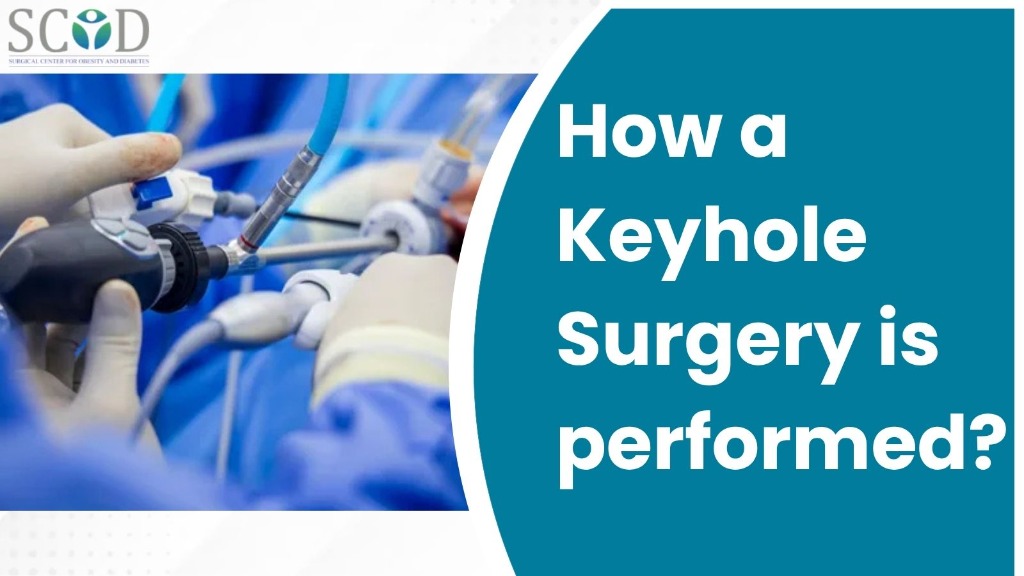
Quick Answer: How a Keyhole Surgery is Performed
A keyhole surgery (laparoscopy) is performed under general anesthesia through 2 to 4 tiny incisions (5 to 10 mm) instead of a large opening. First, the surgeon gently inflates the abdomen with medical-grade carbon dioxide gas to create a clear working space. Next, a specialized high-definition camera (laparoscope) and slender instruments are inserted through narrow tubes called trocars. Guided by magnified, real-time video on a surgical monitor, the surgeon cuts, repairs, or removes tissue with microscopic precision. Finally, the gas is expelled and incisions are sealed with dissolvable stitches or surgical glue.
Introduction: The Marvel of Modern Minimally Invasive Surgery
For decades, undergoing abdominal surgery was accompanied by a daunting prospect: a large, painful incision stretching across several inches of the abdomen, severed muscles, weeks of strict bed rest, and prominent permanent scars. Today, surgical science has achieved a remarkable revolution through minimally invasive surgery, widely recognized by patients as keyhole surgery and clinically termed laparoscopy.
Instead of opening the body wide to look inside, surgeons now look through the eye of a high-resolution microscopic camera and operate through cuts scarcely larger than a buttonhole. Yet, when patients are recommended this advanced procedure, it is completely natural to wonder: How does the surgeon see what they are doing? How can complex organs be repaired or removed through such a narrow opening? And what actually happens inside the operating theatre from the moment you fall asleep to the moment you wake up?
Under the clinical leadership of Dr. Arush Sabharwal at SCOD Clinic, patients seeking world-class Laparoscopic Surgery in Delhi benefit from the highest standards of safety, advanced 4K visualization, and rapid recovery pathways. In this doctor-reviewed, step-by-step guide, we demystify the entire keyhole surgical procedure in plain, easy-to-understand language.
What is Keyhole Surgery? Understanding the Core Concept
The name keyhole surgery comes from an intuitive analogy: just as one can peer through a keyhole to inspect an entire room, a surgeon can access, examine, and treat internal organs through miniature incisions measuring between 0.5 cm and 1 cm (about the width of a pencil).
When performed in the abdominal or pelvic region, it is known as laparoscopy (from the Greek words lapara meaning flank or soft parts of the body, and skopein meaning to view or examine). When performed on joints like the knee or shoulder, it is called arthroscopy; when performed inside the chest, it is known as thoracoscopy.
The underlying objective remains constant across all variations: to achieve the exact same therapeutic outcome as traditional open surgery while dramatically reducing trauma to the skin, nerves, and underlying abdominal muscle wall.
The High-Tech Toolkit: Essential Instruments Used
To understand how a keyhole surgery is performed, it helps to understand the specialized surgical technology that makes it possible:
The Laparoscope
A slender, rigid metal telescope containing specialized fiber-optic cables and a miniature high-definition or 4K digital camera at its tip. It channels intense cold light into the dark cavity and transmits crystal-clear, magnified imagery to external monitors.
Trocars and Access Ports
Hollow cylindrical tubes equipped with one-way airtight silicone valves. Once inserted through the tiny incisions, trocars serve as stable working channels through which the camera and surgical instruments glide smoothly without allowing gas to escape.
The Electronic Insufflator
A computer-controlled medical device that delivers warmed, regulated medical-grade carbon dioxide (CO2) into the abdomen. It maintains constant, safe intra-abdominal pressure (typically 12–15 mmHg) to preserve a stable working dome.
Precision Micro-Instruments
Long, ultra-thin handheld tools designed to replicate the dexterity of human fingers. These include delicate micro-graspers, curved dissection scissors, clip appliers, ultrasonic harmonic scalpels, and electrosurgical cautery hooks.
Step-by-Step: How a Keyhole Surgery is Performed
Every keyhole operation follows a meticulously choreographed clinical protocol designed to ensure patient comfort, maximum sterility, and surgical precision. Here is exactly what happens during each phase of the operation:
Pre-Operative Preparation and General Anesthesia
Before entering the operating theatre, you meet with your anesthesiologist and surgical team. Once positioned comfortably on the operating table, intravenous (IV) medication is administered, causing you to drift into a deep, dreamless sleep.
Because keyhole abdominal surgery requires total muscular relaxation and controlled breathing, a breathing tube is placed while you are asleep. Your abdomen is then cleaned thoroughly with an antiseptic solution and draped with sterile surgical sheets to create an impeccably germ-free environment.
The First Incision and Gentle Insufflation (Creating the Working Space)
In a natural state, the abdominal wall lies flat against your internal organs—stomach, liver, bowel, and gallbladder—leaving no open space to see or move instruments safely.
To solve this, the surgeon makes a tiny 5 mm to 10 mm cut, typically tucked inside or directly beneath the natural fold of the navel (umbilicus). A specialized hollow needle (called a Veress needle) or an open miniature port is introduced, through which medical-grade carbon dioxide (CO2) gas is gently infused. The gas lifts the abdominal wall like an inflated tent, forming a protective dome known as a pneumoperitoneum. CO2 is chosen because it is non-flammable, naturally produced by human tissue, and readily absorbed and expelled by the body.
Placement of Trocars and Inserting the Laparoscope
Once the abdomen is gently pressurized, the surgeon inserts the first trocar into the navel cut and threads the laparoscope through it. Instantly, brilliant light floods the internal cavity.
The video camera transmits high-definition, 10x-to-15x magnified color images onto overhead surgical monitors. Under direct, continuous visual control from the inside, the surgeon creates 2 or 3 additional tiny puncture incisions (ranging from 5 mm to 10 mm) at strategic points across the abdomen and inserts additional trocars. These additional ports serve as access tunnels for surgical instruments.
High-Definition Exploration and Diagnostic Survey
Before addressing the primary surgical objective, the surgeon conducts a panoramic inspection of the abdominal cavity. The camera glides smoothly to examine the liver, gallbladder, intestines, peritoneum, and pelvic organs.
Because the laparoscope provides high-definition magnification, surgeons can identify minute blood vessels, nerve bundles, minor adhesions, and subtle inflammatory changes that might easily be missed with the naked eye during open surgery.
Performing the Surgical Action with Precision Instruments
Watching the ultra-sharp monitor in real time, the surgeon handles the micro-instruments inserted through the side trocars. With remarkable dexterity, the surgical team can:
- Dissect and Separate: Gently separate delicate tissues without tearing muscle fibers.
- Seal Blood Vessels: Use harmonic ultrasonic energy or bipolar electrocautery to instantly seal and coagulate blood vessels, resulting in virtually bloodless surgery.
- Apply Clips and Sutures: Place titanium or absorbable surgical clips to close ducts, or place microscopic internal stitches with needle holders.
- Retrieve Specimens Safely: If an organ is removed (such as a diseased gallbladder, inflamed appendix, or ovarian cyst), it is placed into a sterile miniature nylon retrieval pouch (an Endo Catch bag) inside the abdomen and gently extracted through one of the small trocar incisions.
Evacuating Gas, Port Removal, and Cosmetic Closure
Once the procedure is accomplished and the surgical field is inspected for complete hemostasis (zero bleeding), the instruments are gently withdrawn. The valves on the trocars are opened, and the surgeon gently presses the abdomen to release and suction out virtually all of the carbon dioxide gas.
The trocars are carefully pulled out. Because the cuts are tiny, closing them is simple and cosmetic: the deeper fascia layers are secured with one or two dissolvable stitches, while the skin edges are aligned using fine absorbable sub-cuticular sutures, sterile adhesive strips (Steri-Strips), or medical-grade skin glue (Dermabond). Small waterproof dressings are applied, and you are smoothly awakened from anesthesia.
Keyhole Surgery vs. Traditional Open Surgery: A Detailed Comparison
To appreciate why keyhole surgery has become the gold standard across major surgical specialties, examine how it compares directly against conventional open surgery:
| Surgical Factor | Keyhole Surgery (Laparoscopy) | Traditional Open Surgery |
|---|---|---|
| Incision Size | 3 to 4 tiny incisions (5 mm – 10 mm each) | Single large incision (10 cm – 25 cm) |
| Muscle Trauma | Muscle fibers are separated, not severed | Abdominal muscle layers are sliced through |
| Blood Loss | Minimal (often under 20–30 ml) | Moderate to high (150–400 ml) |
| Post-Op Pain Level | Mild to moderate; short duration | Severe; requires strong opioid pain medications |
| Hospital Stay | Day-care or 24–48 hours | 4 to 8 days |
| Infection Risk | Extremely low due to minimal wound exposure | Significantly higher wound infection rate |
| Full Recovery Time | 1 to 2 weeks | 6 to 8 weeks |
| Cosmetic Scarring | Tiny, nearly imperceptible dot-like scars | Prominent, permanent linear scar |
What Conditions Can Be Treated with Keyhole Surgery?
Due to dramatic advances in instrumentation and robotic assistance, a vast majority of general and gastrointestinal operations are now routinely performed via keyhole techniques:
- Gallbladder Removal (Cholecystectomy): The gold standard treatment for gallstones and cholecystitis. Curious about recovery? Learn how to sleep comfortably following your operation.
- Appendix Removal (Appendectomy): Removing an acutely inflamed appendix. Read about typical surgery duration and recommended post-appendectomy diet options.
- Hernia Repairs (Inguinal, Umbilical, Incisional): Repairing muscle defects and reinforcing abdominal walls with prosthetic mesh. Learn how to prevent a post-operative hernia after tissue repair.
- Bariatric and Metabolic Surgery: Procedures like laparoscopic sleeve gastrectomy and gastric bypass for lasting weight loss and diabetes remission. Learn about clinical protocols and laparoscopic safety before deciding.
- Gastroesophageal Reflux (GERD) & Hiatal Hernia: Fundoplication to rebuild the valve between the esophagus and stomach.
- Gynecological Operations: Removal of ovarian cysts, fibroids, endometriosis lesions, and hysterectomy.
The Recovery Phase: What Happens After Keyhole Surgery?
Because keyhole surgery is so gentle on internal tissues, recovery progresses much more rapidly than most patients anticipate:
1. In the Recovery Room (Hours 0 to 4)
You wake up in the Post-Anesthesia Care Unit (PACU) with warm blankets and vital monitoring. You may feel drowsy, with a mild dry throat from the breathing tube. Nurses provide small sips of water once you are fully alert. Most patients are encouraged to sit upright and dangle their legs over the bed within a few hours.
2. Managing Residual CO2 Gas Pain (Days 1 to 3)
A unique symptom many patients encounter after keyhole surgery is an aching tightness in the upper abdomen or shoulder tips. This is referred pain caused by harmless residual carbon dioxide gas irritating the phrenic nerve near the diaphragm. Discover proven steps to expel trapped CO2 and relieve discomfort quickly.
3. Diet and Nutrition at Home
Your digestive system wakes up quickly after laparoscopy. Starting with clear soups, coconut water, and herbal tea before moving to soft foods like khichdi and curd ensures a smooth transition without nausea or gas. Learn what healing foods to include in your recovery diet plan.
4. Insurance Coverage and Costs
Because keyhole procedures are standard medical treatments, virtually all major health insurance policies in India cover them under cashless hospitalization. For a complete financial breakdown, explore your insurance coverage options.
Why Choose SCOD Clinic for Laparoscopic Surgery in Delhi?
While keyhole surgery relies on cutting-edge instrumentation, the single most crucial factor in your surgical outcome is the skill, precision, and experience of your surgeon. At SCOD Clinic, we combine surgical artistry with the highest standards of evidence-based medical care.
Excellence Under Dr. Arush Sabharwal
Led by Dr. Arush Sabharwal, a pioneer in minimally invasive, bariatric, and metabolic surgery, our surgical team utilizes cutting-edge 4K laparoscopic imaging systems, advanced electrosurgical devices, and proven ERAS (Enhanced Recovery After Surgery) protocols. From your first consultation through post-discharge recovery, patients receiving Laparoscopic Surgery in Delhi at SCOD Clinic experience compassionate care, negligible pain, and rapid return to everyday life.
Frequently Asked Questions (FAQs)
1. What is keyhole surgery and how does it work?
Keyhole surgery (laparoscopy) is a minimally invasive surgical technique where surgeons operate through small cuts (5 to 10 millimeters) rather than large abdominal incisions. A tiny lighted camera called a laparoscope transmits magnified real-time video to a screen, guiding delicate handheld tools to perform the procedure with high precision.
2. Is keyhole surgery performed under general anesthesia?
Yes, nearly all keyhole abdominal surgeries are performed under general anesthesia. You will be completely asleep, relaxed, and feel no pain or discomfort throughout the entire procedure.
3. Why is gas pumped into the stomach during keyhole surgery?
Medical-grade carbon dioxide (CO2) is gently pumped into the abdomen to inflate the abdominal wall like a dome. This temporary space, called a pneumoperitoneum, creates safe working room and clear visibility so the surgeon can operate without bumping into surrounding organs.
4. How long does a keyhole surgery procedure usually take?
Most routine keyhole surgeries, such as appendix or gallbladder removal and basic hernia repairs, take between 30 and 75 minutes. More complex laparoscopic or bariatric procedures may require 90 minutes to 2 hours depending on individual anatomy.
5. How painful is recovery after a keyhole surgery?
Keyhole surgery causes significantly less post-operative pain than open surgery because muscle tissues are spared rather than sliced. Patients typically feel mild soreness around the tiny incisions and temporary shoulder aching from residual CO2, easily managed with mild oral analgesics.
6. How long does it take to fully recover from keyhole surgery?
Most patients can walk within a few hours, return home the same day or following morning, and resume desk work within 5 to 7 days. Full physical recovery and resumption of strenuous sports or heavy lifting typically take 2 to 4 weeks.
7. Will keyhole surgery leave noticeable scars?
No. Because each incision is only about the size of a buttonhole (0.5 to 1 cm), incisions are closed with dissolvable sutures, surgical glue, or sterile tape. Over several months, they fade into tiny, barely visible marks often hidden in natural body creases like the belly button.
8. Can a keyhole surgery be converted to an open surgery?
Yes, although conversion happens in less than 2-3% of elective cases. If severe internal scarring (adhesions from past surgeries), unusual anatomy, or unexpected bleeding prevents a clear, safe laparoscopic view, the surgeon will convert to open surgery as a proactive safety measure to protect patient health.
Final Thoughts
Keyhole surgery is one of modern medicine’s most transformative breakthroughs, transforming what were once traumatic, painful operations into gentle, outpatient or short-stay procedures. Understanding each step of how the procedure is performed replaces surgical anxiety with confidence and clarity.
If you or a loved one has been advised to undergo abdominal, gallbladder, hernia, appendix, or weight loss surgery, trust your care to the best in the field. Contact SCOD Clinic in Delhi today to schedule a comprehensive consultation with Dr. Arush Sabharwal and discover how state-of-the-art Laparoscopic Surgery in Delhi can help you heal quickly, safely, and comfortably.