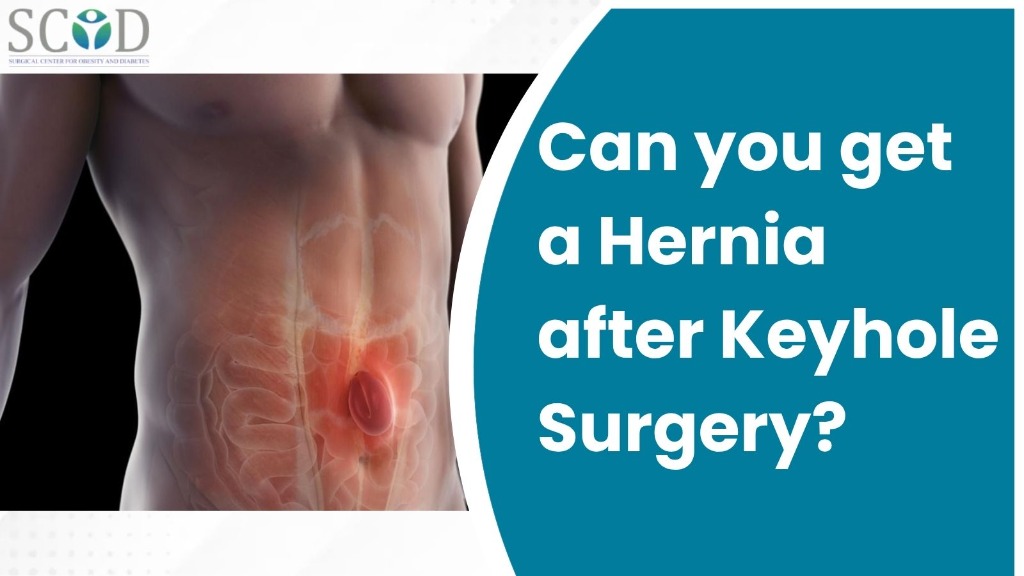
Can you get a Hernia after Keyhole Surgery?
Direct Answer / Quick Summary
Yes, you can get a hernia after keyhole surgery. Medically known as a port-site hernia or trocar-site hernia, it occurs when internal tissues or abdominal organs push through a small muscular defect left behind by one of the surgical keyhole incisions. While the overall incidence is low (ranging between 1% and 3%), factors like larger port sizes, infection, premature physical strain, or poor wound healing increase the risk.
Keyhole surgery—known in the medical field as laparoscopic surgery—has revolutionized modern abdominal operations. By replacing large, open abdominal incisions with tiny keyhole entry points, laparoscopic procedures significantly reduce post-operative pain, shorten hospital stays, minimize scarring, and allow patients to return to their normal daily routines much faster than traditional open surgery. From gallbladder removal (laparoscopic cholecystectomy) and appendectomy to bariatric weight loss procedures and hernia repairs, keyhole techniques are currently the gold standard in surgical care worldwide.
However, despite these remarkable advantages, keyhole surgery remains a real surgical procedure involving cuts through the abdominal muscle wall. A common question patients ask during their post-operative consultation is: can you get a hernia after keyhole surgery? The short answer is yes. Although less frequent than after traditional open surgery, developing a hernia after keyhole surgery is a recognized potential complication. Understanding how these hernias develop, recognizing their early warning signs, knowing the expected hernia recovery time after keyhole surgery, and implementing preventative steps can help ensure a smooth, worry-free recovery.
Understanding Port-Site Hernia: What Happens After Keyhole Surgery?
To understand how a hernia forms following keyhole procedures, it helps to examine how laparoscopic surgery is performed. During a keyhole operation, the surgeon creates 3 to 5 tiny punctures (ranging from 5 millimeters to 12 millimeters in size) through the skin and underlying muscle fascia of the abdominal wall. Specialized hollow instruments called trocars are inserted into these entry ports. These ports allow the surgical team to insert miniature cameras, lights, and specialized micro-instruments inside the abdominal cavity.
Once the operation is completed, the surgeon removes the trocars and carefully closes the port sites. In larger port sites (usually 10mm or 12mm entry points), the deep muscular fascia is stitched tightly together before closing the outer skin layer. However, if the underlying muscle fascia fails to fuse completely during the recovery period, a tiny gap or weak spot remains in the abdominal wall. Over time, internal fatty tissue or a small loop of the intestine can push through this gap, creating a soft bulge beneath the skin. This specific type of post-surgical defect is classified medically as an incisional hernia or a port-site hernia.
While port-site hernias are far less common than traditional incisional hernias after open surgery (which can occur in up to 15-20% of open procedures), they require proper medical evaluation and timely care to prevent complications like tissue entrapment (incarceration) or loss of blood supply (strangulation).
What Causes a Hernia After Keyhole Surgery? (Key Risk Factors)
A hernia does not usually form overnight without underlying contributing factors. The failure of a surgical keyhole wound to heal completely is typically driven by a combination of mechanical factors, surgical variables, and patient health conditions. Here are the primary reasons why someone might develop a hernia after keyhole surgery:
1. Larger Port-Site Size
Ports measuring 10mm or 12mm (often used at the navel/umbilicus to extract tissue or insert the primary camera) leave larger defects in the abdominal fascia. If these larger fascial openings are not closed meticulously, the probability of tissue herniation increases significantly compared to smaller 5mm ports.
2. Increased Intra-Abdominal Pressure
Any physical action that rapidly spikes pressure within the abdomen during the initial healing phase can force tissue into an open fascial gap. Common triggers include premature heavy weight lifting, severe chronic coughing, persistent vomiting, or straining due to severe constipation.
3. Surgical Site Infection
If a keyhole incision develops a localized superficial or deep wound infection, the inflammatory response weakens the newly forming collagen tissue. Infections disrupt the normal scarring process, making the fascial layer fragile and prone to pulling apart under normal physical activity.
4. Patient-Specific Health Factors
Individual systemic factors influence collagen synthesis and tissue repair. Patients with obesity, uncontrolled type 2 diabetes, malnutrition, advanced age, or those taking long-term steroid therapy experience slower wound repair, raising the overall risk of port-site weakness.
Recognizing the Symptoms: How to Spot a Port-Site Hernia
Identifying a hernia early allows for prompt medical intervention before serious complications develop. A port-site hernia can appear within a few weeks of keyhole surgery, but in many cases, it manifests several months or even a year after the initial procedure.
Patients should monitor their surgical scars for the following characteristic signs and symptoms:
-
A Visible or Palpable Bulge:
The most hallmark sign is a small, soft lump or protrusion near one of the former keyhole scar sites (most commonly around the belly button). This bulge usually becomes more prominent when standing up, coughing, laughing, or straining, and may shrink or disappear when lying flat on your back.
-
Localized Discomfort or Aching Pain:
Patients often feel a dull ache, tenderness, or a sensation of fullness and heavy dragging pressure at the port site, particularly towards the end of the day or after prolonged standing and physical activity.
-
Skin Discoloration or Redness:
The skin over the hernia bulge may appear slightly inflamed, pink, or dark if the underlying tissue is experiencing localized friction or pressure from tightness in the abdominal wall.
Urgent Warning: Red Flag Emergency Symptoms
If a hernia bulge becomes firm, dark red or purple, extremely painful, cannot be pushed back inside (incarceration), or is accompanied by severe nausea, vomiting, or an inability to pass gas or bowel movements, this indicates a strangulated hernia.
This is a life-threatening surgical emergency requiring immediate emergency medical care to restore blood supply to the trapped intestinal tissue.
Hernia Recovery Time After Keyhole Surgery: What to Expect
Understanding the normal healing phases helps patients differentiate typical surgical recovery from hernia-related complications. The general hernia recovery time after keyhole surgery varies based on individual health, the type of original procedure performed, and whether a secondary hernia repair is required.
| Recovery Phase | Timeframe | Key Milestones & Guidelines |
|---|---|---|
| Phase 1: Initial Healing | Days 1 – 14 | Skin incisions close. Light walking is encouraged to prevent blood clots. Avoid lifting anything heavier than 5 kg (10 lbs). Mild swelling and soreness at port sites are normal. |
| Phase 2: Fascial Strengthening | Weeks 2 – 4 | Internal muscle layers continue to knit together. Most patients return to desk work and routine non-strenuous daily activities. Light stretching permitted. |
| Phase 3: Full Tissue Remodeling | Weeks 6 – 12 | Deep fascial layers regain up to 80% of original tensile strength. Gradual return to full exercise, sports, and heavy lifting under surgeon approval. |
| Post-Hernia Repair Recovery | 2 – 4 Weeks | If a port-site hernia is surgically repaired using keyhole techniques and mesh, recovery is quick, with most patients resuming routine activities within 2 to 3 weeks. |
Adhering strictly to these recovery guidelines is the single most effective way to protect your abdominal wall while the muscle tissue regains its native strength.
Treatment Options: How Is a Port-Site Hernia Repaired?
It is important to understand that abdominal hernias—including hernias that develop after keyhole operations—do not heal on their own with time, exercise, or medications. Because a hernia is a physical structural gap in the muscle wall, definitive correction requires surgical repair.
Fortunately, modern surgical advancements make hernia repair safe, highly successful, and minimally invasive. When addressed promptly, a port-site hernia can usually be repaired through advanced Laparoscopic Hernia Surgery in Delhi.
Keyhole Repair Technique
Using small laparoscopic entry points away from the affected area, the surgeon gently reduces the protruding tissue back into the abdominal cavity and reinforces the weak muscle defect from the inside. This keyhole approach minimizes secondary scarring and accelerates overall healing.
Tension-Free Surgical Mesh Placement
To ensure long-term durability and prevent the hernia from recurring, a high-grade biocompatible medical mesh is positioned behind the abdominal wall defect. The mesh acts as a sturdy structural scaffold, allowing natural host tissue to grow into it and permanently bridging the gap without placing tension on surrounding muscles.
Expert Consultation & Specialized Surgical Oversight
Receiving an accurate diagnosis and individualized treatment plan from a highly skilled specialist like Dr. Arush Sabharwal ensures that the repair is customized to your abdominal structure, minimizing discomfort and ensuring optimal long-term outcomes.
Effective Prevention Strategies: Minimizing Your Hernia Risk
While surgeons take extensive precautions to close deep keyhole incisions securely, patients play an equally critical role in post-operative care. You can significantly lower your risk of developing a hernia after keyhole surgery by following these essential recovery rules:
Refrain from lifting objects heavier than 5 kg (including groceries, gym weights, or young children) for at least 4 to 6 weeks post-surgery.
If you have allergies, asthma, or a seasonal cold, ask your doctor for cough suppressants to eliminate repetitive abdominal spikes in pressure.
Drink plenty of fluids, consume high-fiber foods, and use mild stool softeners if prescribed to avoid straining during bowel movements.
Place a soft pillow gently against your stomach incisions to provide external support whenever you need to cough, sneeze, or stand up.
Frequently Asked Questions (FAQs)
1. Can you get a hernia after keyhole surgery?
Yes, you can get a hernia after keyhole surgery. Known as a port-site or trocar-site hernia, it occurs when internal fat or bowel tissue bulges through a small gap in the abdominal muscle wall where a keyhole instrument was inserted during surgery.
2. How common is a hernia after laparoscopic (keyhole) surgery?
Port-site hernias are relatively rare, occurring in approximately 1% to 3% of patients undergoing keyhole procedures. They are significantly less common than hernias following open abdominal surgery, which carry a risk of up to 15-20%.
3. What is the typical hernia recovery time after keyhole surgery?
Initial recovery from keyhole surgery takes about 1 to 2 weeks, while full fascial muscle healing takes 6 to 8 weeks. If a port-site hernia occurs and requires laparoscopic repair, most patients recover comfortably within 2 to 3 weeks following the repair.
4. How do I tell if a bulge near my incision is a hernia or normal swelling?
Normal post-operative swelling or fluid accumulation (seroma) typically decreases steadily over 2 to 4 weeks. A hernia, on the other hand, persists or enlarges when standing, coughing, or straining, and may feel soft or variable in size. An ultrasound or clinical examination by a surgeon can confirm the diagnosis.
5. Can a port-site hernia go away on its own without surgery?
No. Hernias represent a mechanical tear or opening in the muscular fascia and will not close spontaneously. While small, asymptomatic hernias may be monitored initially, elective surgical repair is generally recommended to prevent future complications like tissue incarceration.
6. Is laparoscopic hernia repair painful?
Laparoscopic hernia repair is designed to minimize post-operative pain. Patients usually experience mild to moderate soreness for a few days, which is easily managed with prescribed oral pain relievers, allowing a quick return to normal activities.
7. What happens if a hernia after keyhole surgery is left untreated?
If left untreated, a hernia can enlarge over time and carries the risk of tissue incarceration (tissue becoming stuck in the muscle wall) or strangulation (loss of blood supply to the trapped tissue), which requires emergency surgical intervention.
8. When can I safely resume gym workouts and heavy lifting after keyhole surgery?
Most surgeons recommend waiting at least 4 to 6 weeks before engaging in vigorous exercise, heavy weight lifting, or high-impact sports. Always obtain clearance from your surgical specialist before resuming strenuous activities.
Conclusion & Expert Surgical Care at SCOD Clinic
While keyhole surgery is exceptionally safe and offers a faster, smoother recovery than open surgery, developing a hernia after keyhole surgery remains a small but real possibility. By recognizing the early symptoms, following post-operative activity restrictions, and seeking prompt evaluation if you notice a unusual bulge around your surgical scars, you can protect your long-term health and peace of mind.
If you suspect you may have developed a hernia following a previous laparoscopic procedure or need guidance on abdominal surgery recovery, the expert surgical team at SCOD Clinic is here to help. Led by Dr. Arush Sabharwal, SCOD Clinic provides world-class evaluation and advanced minimally invasive solutions, including state-of-the-art Laparoscopic Hernia Surgery in Delhi. Contact us today to schedule your comprehensive consultation.