Why is My Stomach Bigger after Hernia Surgery? {2026 Guide}
Direct Answer / Quick Summary
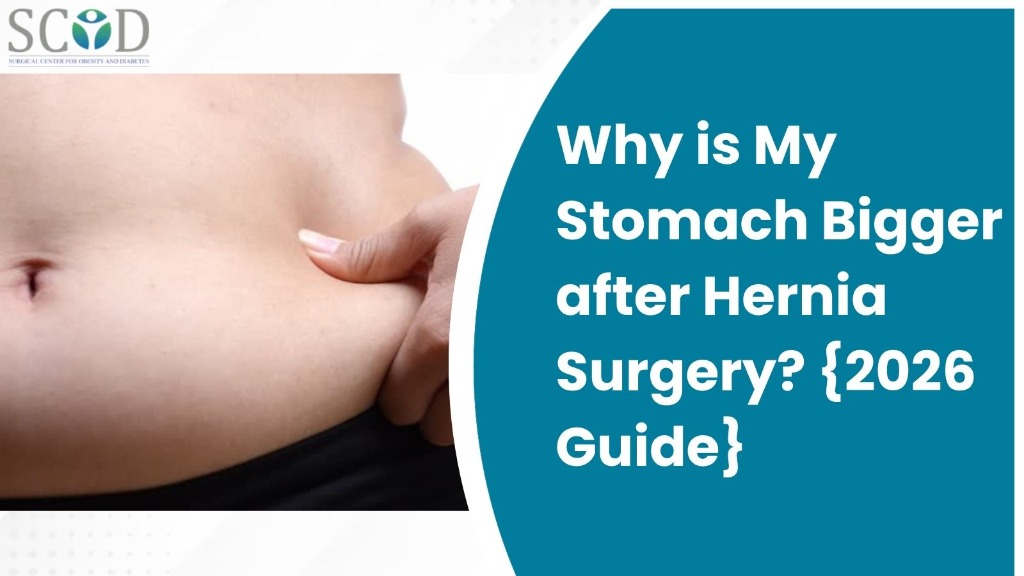
If you are wondering Why is My Stomach Bigger after Hernia Surgery, the simple answer is that postoperative abdominal distension is a standard, expected part of healing. It is caused by four primary factors: surgical inflammation and tissue edema, residual carbon dioxide gas from laparoscopic procedures, temporary bowel sluggishness (constipation and trapped intestinal gas) caused by anesthesia and painkillers, and benign fluid pockets called seromas that fill the space where the hernia used to be. In most patients, visible stomach swelling after hernia surgery peaks during the first 72 hours and gradually disappears over 2 to 6 weeks.
Undergoing a modern hernia repair is one of the most effective ways to eliminate physical pain, prevent intestinal strangulation, and restore abdominal strength. Many patients expect that right after surgery, their belly will look completely flat and back to normal.
Instead, when looking in the mirror two or three days later, many notice their abdomen looks rounder, puffier, or firmer than before. Some even worry that the surgery failed or that the hernia has already returned.
Seeing your Stomach Bigger after Hernia Surgery is one of the most common post-operative experiences. This 2026 guide explains why post-surgical abdominal enlargement happens, how to differentiate normal swelling from red flags, and how to recover smoothly with expert advice from a leading Laparoscopic Hernia Surgeon in Delhi NCR like Dr. Arush Sabharwal.
7 Reasons Why Your Stomach Looks or Feels Bigger After Hernia Surgery
Hernia surgery involves delicate manipulation of muscular layers, fascia, and connective tissues. Even with minimally invasive keyhole techniques, the body triggers a protective biological response. Below are the seven primary reasons for your enlarged abdomen:
1 Trapped Carbon Dioxide Gas (Laparoscopic Insufflation)
During keyhole or robotic surgery, the surgeon gently inflates your abdominal cavity with medical-grade carbon dioxide (CO2). This expands the belly like a dome, creating clear visibility and operating space.
Although most gas is removed before closing the incisions, small pockets remain trapped under your diaphragm and abdominal lining. This creates visible bloating and can cause referred ache in the right shoulder. Learn simple ways to relieve this in our guide on how to get rid of CO2 after laparoscopic surgery.
2 Normal Post-Surgical Tissue Edema (Inflammation)
Any incision or tissue repair triggers an acute healing response. The immune system rushes white blood cells, lymphatic fluids, and blood flow to the site to knit tissues back together.
This localized fluid accumulation—called edema—spreads through the soft tissues of the lower belly, creating a swollen, puffy appearance that is most noticeable during the first 1 to 2 weeks.
3 Formation of a Seroma (Fluid in the "Dead Space")
Before surgery, your hernia pushed outward, stretching surrounding tissue into an empty pocket. Once the protruding tissue is reduced and reinforced with mesh, that empty pocket remains.
The body naturally fills this "dead space" with clear lymphatic fluid, forming a seroma. A seroma can feel like a firm or squishy lump right where your hernia used to be. Patients often mistake it for a recurring hernia, but it is harmless fluid that the body slowly reabsorbs over 4 to 12 weeks.
4 Bowel Sluggishness, Constipation, and Trapped Gas
General anesthesia temporarily relaxes digestive muscular contractions. Additionally, narcotic pain relievers slow intestinal transit times, frequently leading to constipation.
When stool and digestive gas back up in your colon, your intestines dilate and push outward against the abdominal wall. This makes the stomach feel tight, swollen, and bloated. Check our recommendations on what to eat after laparoscopic surgery to maintain easy bowel movements without straining.
5 Temporary Loss of Abdominal Muscle Tone
Your abdominal core acts like a natural corset holding internal organs in place. Following surgery, local discomfort and nerve reflexes cause these muscles to relax involuntarily to avoid tension on the repair.
Without active muscle tone, your abdominal contents shift forward when standing, creating a temporary "pouch" effect. Core support naturally returns as soreness clears and walking increases.
6 Return of Herniated Contents into the Abdomen
In larger ventral, incisional, or umbilical hernias, loops of intestine or protective fat lived outside the normal abdominal space for months.
During repair, these tissues are returned inside the core cavity. Adding this volume back into a closed compartment temporarily increases your waist girth until the abdominal muscles adapt. Read more about hernia repairs in our article on umbilical hernia care.
7 The Healing Ridge and Mesh Integration
Between weeks 2 and 6, your body weaves collagen fibers through the synthetic mesh and incision lines to form a durable repair.
This forms a firm, palpable thickening known as a "healing ridge." While it feels like a hard lump under the skin, it is evidence of solid healing. Over several months, this tissue softens and flattens out.
Normal Swelling vs. Potential Complications: Quick Comparison
Distinguishing typical healing from potential complications gives you confidence during recovery. Here is a clear reference table to help you understand your symptoms:
| Condition | How It Feels | Timeline | Recommended Action |
|---|---|---|---|
| Normal Post-Op Edema | Soft, tender fullness across the lower belly. | Days 1 to 7 | Rest, gentle walking, light ice packs, loose clothes. |
| Trapped CO2 Gas | Tight, drum-like belly with right shoulder ache. | Hours 12 to 72 | Frequent walking, peppermint tea, upright posture. |
| Seroma (Fluid Pocket) | Squishy or firm lump at the hernia site; painless or mildly sore. | Weeks 1 to 4 | Monitor closely; reabsorbs naturally in most patients. |
| Hematoma | Firm, tender mass with purple or bluish skin bruising. | Days 2 to 7 | Notify your surgeon; small hematomas resolve on their own. |
| Wound Infection | Spreading redness, heat, fever over 101°F, pus or odor. | Days 4 to 14 | Urgent: Contact surgical team immediately. |
| Recurrent Hernia | Soft bulge that expands with coughing and reduces when lying down. | Months to Years | Consult surgeon. Read: does hernia come back after surgery? |
Post-Op Recovery Timeline: Week-by-Week Guide
Recovery varies depending on your overall health, the size of your hernia, and whether your surgery was open or keyhole. Here is the typical progression:
Days 1 to 7: Peak Swelling and Bloating
Swelling, bruising, and gas distension are at their highest. Residual CO2 and sluggish bowels contribute to a bloated belly. Wearing loose, comfortable clothing and taking gentle walks around your home are key.
Weeks 2 to 4: Significant Deflation
CO2 gas is completely absorbed, bowel regularity returns, and generalized tissue swelling diminishes noticeably. Your stomach looks much flatter, although you may feel a firm healing ridge or seroma under the incision.
Weeks 5 to 8: Seroma Resolution and Muscle Return
The body reabsorbs seroma fluid, core muscles regain tone, and light everyday activities feel comfortable. Most patients can return to standard clothing comfortably.
Months 3 to 6: Final Contour Settling
Scar tissue softens, the mesh fully incorporates into your abdominal wall, and your abdomen settles into its permanent post-surgical contour.
How to Reduce Stomach Swelling After Hernia Surgery: Actionable Tips
While healing takes time, these doctor-recommended self-care steps can help ease abdominal swelling and speed recovery:
Walk Regularly
Gentle, frequent walking is the best natural therapy to expel trapped gas, wake up sluggish intestines, and stimulate lymphatic drainage. Take a 5 to 10-minute stroll every few hours while awake.
Hydrate and Eat Fiber
Drink 2 to 2.5 liters of water daily and choose fiber-rich meals (oats, cooked greens, papaya). Preventing constipation eliminates severe straining that increases intra-abdominal pressure and swelling.
Use an Abdominal Binder (If Advised)
An elastic compression binder supports healing muscles, limits seroma fluid buildup, eases movement discomfort, and helps flatten the swollen abdominal wall.
Apply Cold Packs (First 48 Hours)
Wrap an ice pack in a clean cloth and apply it to swollen areas for 15 minutes at a time. Cold therapy constricts local blood vessels and numbs surgical soreness.
Important Things to Avoid During Early Recovery:
- Avoid heavy lifting: Do not lift objects heavier than 4 to 5 kg (10 lbs) for 4 to 6 weeks. Lifting spikes abdominal pressure and risks hernia recurrence. Read our guide on keyhole surgery hernia prevention.
- Avoid excessive sodium: Salty foods lead to water retention, making your belly look puffier.
- Avoid carbonated drinks: Sodas and fizzy drinks introduce extra gas into the stomach.
- Do not strain during bowel movements: Use a doctor-prescribed stool softener if you feel constipated.
When to Contact Your Surgeon: Warning Signs and Red Flags
While temporary stomach swelling after hernia surgery is normal, certain signs require immediate medical attention:
- Rapidly enlarging, tense bulge: Swelling that grows quickly within a few hours and causes severe pain.
- Fever and chills: Temperature exceeding 101°F (38.3°C), indicating a possible infection.
- Spreading redness or warmth: Erythema expanding around the incision sites.
- Foul drainage: Pus or cloudy, malodorous fluid draining from wounds.
- Inability to pass gas or stool: Persistent nausea, vomiting, or complete bowel stoppage after 48 hours.
- Shortness of breath or chest pain: Demands emergency evaluation.
Consult Dr. Arush Sabharwal at SCOD Clinic
Selecting an experienced surgical specialist is vital to achieving a secure repair, minimizing tissue trauma, and ensuring a comfortable recovery. At SCOD Clinic, patient care is grounded in precision surgical science and dedicated post-operative follow-up.
As a renowned Laparoscopic Hernia Surgeon in Delhi NCR, Dr. Arush Sabharwal uses cutting-edge keyhole and robotic techniques that preserve abdominal wall integrity and dramatically reduce recovery time. If you have concerns about post-surgical swelling or need an expert evaluation, our surgical team is here to support you at every stage.
Frequently Asked Questions (FAQs)
Why is my stomach bigger after hernia surgery?
Your stomach is bigger after hernia surgery mainly due to natural surgical inflammation (edema), trapped carbon dioxide gas used during laparoscopy, constipation from pain medications, and fluid accumulation known as a seroma in the space where the hernia was repaired.
How long does stomach swelling after hernia surgery last?
The sharpest swelling and gas bloating usually peak within the first 3 days and decrease substantially over 1 to 2 weeks. Residual tissue puffiness, firm scar tissue, or seroma fluid can take 6 to 12 weeks to completely resolve.
Is it normal to see a bulge that looks like the hernia is still there?
Yes, this is very common. When a hernia is repaired, the remaining empty pocket often fills with clear bodily fluid called a seroma. It can feel like the original hernia, but it is harmless and usually absorbed by your body over a few weeks.
Why is my belly so distended after keyhole laparoscopic surgery?
During laparoscopic surgery, the abdomen is inflated with medical-grade carbon dioxide gas to create room for the surgeon to work. Small amounts of residual CO2 stay trapped for a few days, leading to temporary bloating and shoulder discomfort.
Can an abdominal binder reduce swelling after hernia repair?
Yes. If approved by your surgeon, a medical abdominal binder offers gentle support to healing muscles, helps prevent fluid buildup, eases movement pain, and reduces abdominal swelling.
Why does constipation make post-surgery swelling worse?
Anesthesia and pain medications slow down bowel movements. When stool and digestive gas accumulate, your intestines expand, pushing outwards and making your stomach appear noticeably larger and tighter.
When does stomach swelling indicate an emergency?
Contact your doctor immediately if swelling comes with severe worsening pain, high fever, spreading redness or heat around the wound, foul drainage, continuous vomiting, or an inability to pass gas or stool.
Does abdominal swelling mean my hernia surgery failed?
Almost certainly not. Early recurrence is rare with modern mesh repair. Swelling is almost always normal tissue healing, fluid buildup (seroma), or bowel gas rather than a failed operation.
Concerned About Post-Hernia Swelling?
Consult with Dr. Arush Sabharwal, leading Laparoscopic Hernia Surgeon in Delhi NCR at SCOD Clinic, for expert post-operative evaluation and comprehensive surgical recovery care.