How is Gastric Bypass Surgery more effective than Other Procedures?
Quick Answer: Why Gastric Bypass is More Effective
Roux-en-Y gastric bypass is more effective than purely restrictive procedures because it operates through a dual mechanism: restriction plus malabsorption. By creating a tiny stomach pouch and rerouting the upper small intestine, it produces higher excess weight loss (70%–80%), stronger long-term durability at 10 to 20 years, superior type 2 diabetes remission (up to 80%), and near-total relief from chronic acid reflux (GERD), making it the enduring global gold standard in metabolic surgery.
Introduction: The Evolving World of Weight Loss Surgery
For individuals battling severe obesity and metabolic illness, bariatric surgery offers a life-altering opportunity to reclaim health, vitality, and longevity. However, patients exploring surgical intervention quickly find themselves evaluating several options: sleeve gastrectomy, gastric banding, endoscopic gastric balloons, and Roux-en-Y gastric bypass. With so many choices available, a fundamental question often arises during surgical consultations: How is gastric bypass surgery more effective than other procedures?
Clinically referred to as gastric bypass surgery, this procedure has been performed and refined for over five decades. While newer procedures like the sleeve gastrectomy have surged in popularity due to technical simplicity, gastric bypass continues to earn the title of the medical "gold standard."
At SCOD Clinic, where specialists perform advanced Bariatric Surgery in Delhi, patient evaluation focuses on matched physiological care rather than a one-size-fits-all approach. For thousands of patients with severe metabolic syndrome, insulin resistance, or chronic acid reflux, gastric bypass remains uniquely superior. In this comprehensive guide, we examine the physiological mechanisms, long-term clinical data, metabolic benefits, and practical realities that distinguish gastric bypass from alternative bariatric options.
Understanding How Gastric Bypass Works: The Dual Action Power
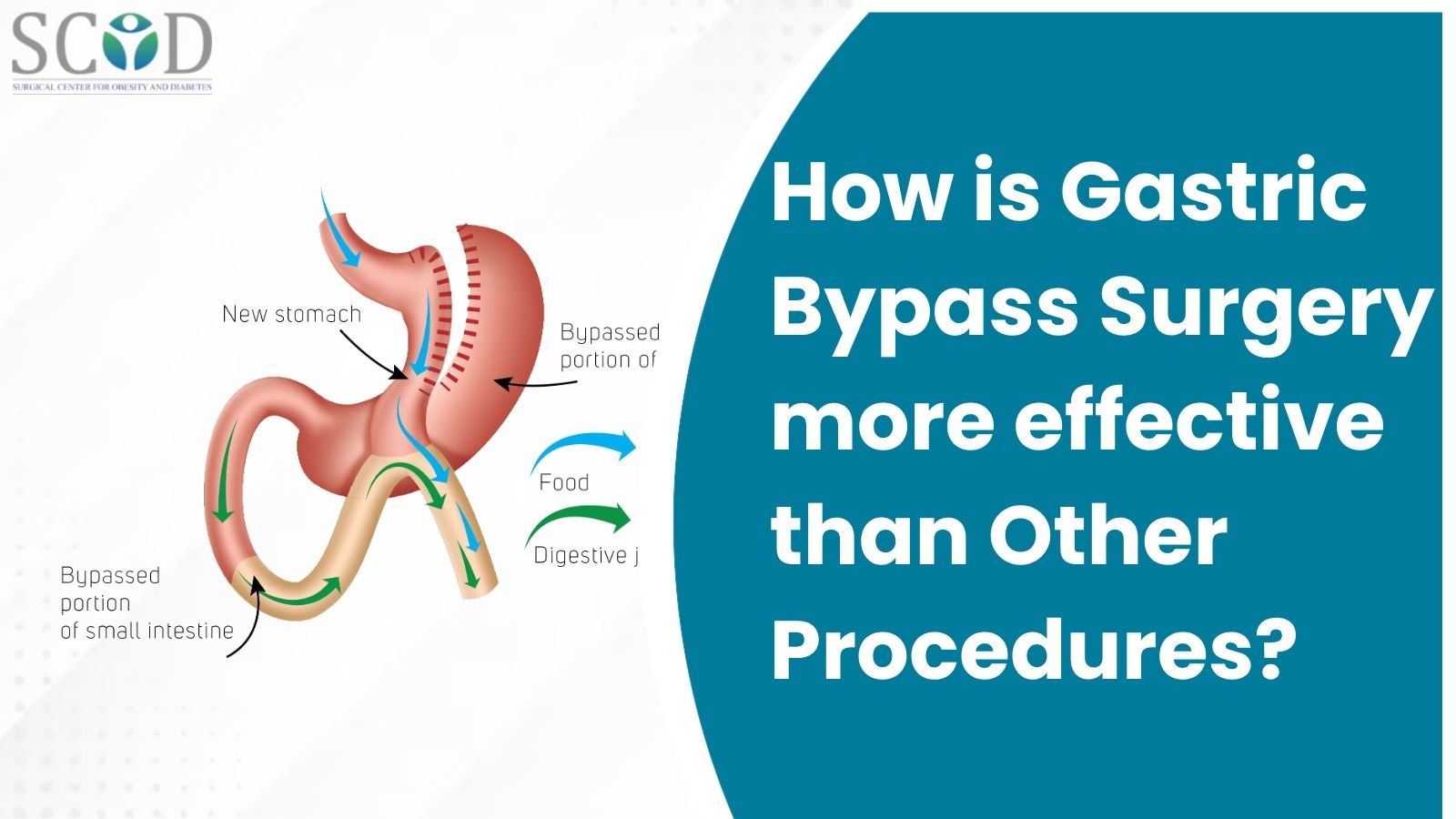
To appreciate why gastric bypass outperforms other procedures, you must understand how it alters your digestive anatomy. Most weight loss procedures rely entirely on restriction: they shrink the size of your stomach so you feel physically full after eating small portions. Gastric bypass, however, utilizes a powerful dual mechanism:
- Component 1: Physical Restriction: The surgeon divides the upper stomach to form an egg-sized pouch holding only 30 milliliters (about one ounce) of food. This immediately limits how much you can eat in a single sitting, bringing rapid satiety.
- Component 2: Caloric & Nutrient Malabsorption: The surgeon connects this new pouch directly to the middle section of the small intestine (the jejunum), bypassing the rest of the stomach and the duodenum (the first part of the small intestine). This shortens the digestive tract where calorie and carbohydrate absorption normally happens.
This clever anatomical rerouting does much more than just restrict calories. It activates profound neurohormonal adaptations that reset your body's metabolic thermostat. To understand the exact surgical steps, explore our detailed companion piece on how does gastric bypass work.
Comprehensive Comparison: Gastric Bypass vs. Other Procedures
The table below illustrates how Roux-en-Y gastric bypass compares directly against alternative bariatric procedures across key clinical metrics:
| Procedure Metric | Roux-en-Y Gastric Bypass | Sleeve Gastrectomy | Gastric Banding | Gastric Balloon |
|---|---|---|---|---|
| Mechanism | Dual (Restriction + Malabsorption) | Restrictive Only | Restrictive Only | Temporary Restrictive |
| Avg. Excess Weight Loss | 70% – 80% | 60% – 70% | 40% – 50% | 25% – 35% |
| Diabetes Remission Rate | Up to 80% – 85% | 60% – 70% | 45% – 50% | Low & Temporary |
| Impact on Severe GERD | Resolves Reflux (>90%) | May worsen or cause reflux | High risk of reflux / slippage | Temporary heartburn |
| Durability (10–15 Years) | Highest long-term maintenance | Good (moderate regain risk) | Poor (high removal rate) | None (device removed at 6 mos) |
| Permanent Reversibility | Anatomically Reversible | Irreversible (stomach resected) | Reversible (band removed) | Reversible (temporary) |
6 Key Reasons Gastric Bypass is More Effective
Decades of comparative bariatric literature demonstrate why Roux-en-Y gastric bypass remains exceptionally potent across metabolic and lifestyle outcomes:
1 Superior Long-Term Weight Loss & Resistance to Regain
While sleeve gastrectomy yields impressive weight reduction during year one, long-term studies tracking patients over 10 to 20 years show that gastric bypass patients sustain a higher percentage of total weight loss. The bypassed intestinal segment provides continuous mild malabsorption that protects against gradual pouch dilation, helping patients maintain their target weight over their lifetime.
Learn more about clinical benchmarks in our guide on how much weight loss occurs after bariatric surgery.
2 Unrivaled Type 2 Diabetes Remission
Gastric bypass triggers an immediate surge in glucagon-like peptide 1 (GLP-1) and peptide YY (PYY) — hormones secreted by the lower intestine that stimulate the pancreas to produce insulin and reverse cellular insulin resistance. Remarkably, many patients discontinue insulin injections within 48 to 72 hours of leaving the operating theater, well before significant weight loss happens.
Explore the endocrinological evidence in our post on can bariatric surgery reverse diabetes.
3 The Ultimate Solution for Severe Acid Reflux (GERD)
One notable drawback of the sleeve gastrectomy is that converting the stomach into a narrow, high-pressure tube can worsen pre-existing gastroesophageal reflux disease (GERD) or even create new-onset reflux in up to 20% of patients. In contrast, gastric bypass creates a low-pressure pouch completely disconnected from stomach acid-producing cells and bile. It is widely recognized as the definitive surgical cure for severe reflux in patients with obesity.
4 The Built-In Deterrent: Dumping Syndrome
Because the pyloric sphincter (the natural muscular valve regulating stomach emptying) is bypassed, foods high in refined sugars, simple syrups, or heavy saturated fats dump rapidly into the sensitive jejunum. This triggers a temporary reaction marked by abdominal cramping, sweating, and heart palpitations known as "dumping syndrome." While unpleasant, it serves as a powerful psychological and physiological deterrent, conditioning patients away from sugary treats and sweets that derail weight loss after other procedures.
5 Permanent Reversibility & Surgical Flexibility
In sleeve gastrectomy, approximately 80% of the stomach is permanently resected and physically removed from the abdominal cavity — it cannot ever be reconstructed. In gastric bypass, the bypassed remnant stomach and upper intestine remain inside the body unharmed and receiving blood flow. If a patient ever encounters a severe medical complication, the anatomical circuit can be restored. Furthermore, if a patient initially underwent a sleeve and experienced weight regain or debilitating reflux, gastric bypass serves as the premier revision surgery. See our analysis on can bariatric surgery be done twice.
6 Superior Resolution of Cardiovascular Risk Factors
Gastric bypass consistently shows faster and more pronounced improvements in hyperlipidemia (high cholesterol and triglycerides), systemic inflammation (C-reactive protein), obstructive sleep apnea, and non-alcoholic fatty liver disease (NAFLD) compared to purely restrictive methods. Bypassing the duodenum fundamentally shifts bile acid signaling, activating nuclear receptors (such as FXR and TGR5) that directly modulate whole-body lipid and glucose metabolism.
Who is the Ideal Candidate for Gastric Bypass?
While every surgical candidate requires thorough multidisciplinary evaluation, gastric bypass is particularly advantageous for individuals who present with:
Poorly Controlled Type 2 Diabetes
Patients on multiple oral hypoglycemics or daily insulin achieve faster and deeper glycemic remission with bypass than with a sleeve.
Chronic Acid Reflux or Hiatal Hernia
If you rely on daily antacids or PPIs, sleeve surgery carries high risk of aggravating reflux, whereas bypass resolves it completely.
Higher BMI (BMI > 45 – 50 kg/m²)
Individuals needing to shed over 50 to 70 kilograms benefit heavily from the dual malabsorptive mechanism to reach a healthy weight.
"Sweet Eaters" & Graziers
Patients prone to high-sugar liquid snacking experience dumping syndrome, which serves as a natural psychological safeguard against sweet cravings.
To learn more about overall eligibility criteria, review our comprehensive clinical guide on when bariatric surgery is recommended.
Nutritional Commitments: What Makes Bypass Patients Successful
Because gastric bypass alters intestinal absorption, it demands a lifelong commitment to nutritional discipline. Understanding these requirements ensures optimal vitality and prevents post-surgical deficiencies:
- Lifelong Micronutrient Supplementation: Because the duodenum — the primary absorption site for calcium, iron, and folate — is bypassed, daily high-potency multivitamins, calcium citrate, vitamin D3, and vitamin B12 are mandatory.
- Strict Protein Prioritization: Patients must consume 60 to 80 grams of bioavailable protein each day (from lean poultry, eggs, cottage cheese, tofu, and protein shakes) to maintain muscle mass and metabolic rate.
- Consistent Hydration: Sipping at least 2 liters of water daily between meals prevents dehydration and protects renal filtration without over-distending the small pouch.
- Routine Biochemical Monitoring: Annual blood work tracking ferritin, hemoglobin, electrolytes, fat-soluble vitamins, and parathyroid hormone ensures early detection and correction of any minor nutritional dips.
Frequently Asked Questions (FAQs)
1. Why is gastric bypass considered the gold standard of bariatric surgery?
Roux-en-Y gastric bypass is called the gold standard because it couples physical restriction with mild intestinal malabsorption. This dual action produces potent hormonal corrections, superior long-term excess weight loss, and proven remission of metabolic diseases like type 2 diabetes and chronic acid reflux.
2. How does weight loss with gastric bypass compare to gastric sleeve surgery?
While both procedures provide dramatic weight loss, clinical evidence demonstrates that gastric bypass patients achieve higher average excess weight loss (around 70% to 80% compared to 60% to 70% for sleeve gastrectomy) and exhibit lower rates of weight regain over 10 to 15 years.
3. Can gastric bypass surgery cure type 2 diabetes?
Yes, gastric bypass induces rapid remission of type 2 diabetes in up to 80% to 85% of cases. Blood sugar levels frequently normalize within days of surgery before significant pounds are lost, thanks to powerful gut incretin releases such as GLP-1.
4. Why is gastric bypass preferred over sleeve surgery for patients with GERD or acid reflux?
Gastric bypass creates a low-pressure pouch isolated from acid-producing gastric cells, resolving acid reflux in over 90% of patients. In contrast, sleeve surgery narrows the stomach into a high-pressure tube that can aggravate existing heartburn or provoke new reflux symptoms.
5. Is gastric bypass surgery reversible?
Yes, because no portion of the stomach or intestine is removed from the abdomen, gastric bypass is anatomically reversible. However, reversal is a major surgical procedure reserved only for severe medical necessities; the overwhelming majority of patients live happily with the bypass indefinitely.
6. What is dumping syndrome, and does it help with weight loss?
Dumping syndrome occurs when concentrated sugars or greasy foods enter the small intestine rapidly, triggering temporary cramping, sweating, and nausea. While uncomfortable, it functions as a strong behavioral deterrent against calorie-dense sweets and junk foods.
7. Do I have to take vitamins for life after gastric bypass?
Yes. Bypassing the duodenum reduces absorption of certain nutrients, making daily supplementation of high-grade multivitamins, calcium citrate, iron, and vitamin B12 necessary to maintain optimal long-term bone density and blood health.
8. How do I know if gastric bypass is the right procedure for me?
Choosing the best surgical path depends on your starting BMI, medical comorbidities (such as diabetes and reflux), past surgical history, and eating habits. Consulting top specialists in Bariatric Surgery in Delhi at SCOD Clinic ensures a customized, safe, and effective surgical plan.
Final Thoughts
When comparing bariatric surgical options, Roux-en-Y gastric bypass remains an unmatched benchmark of clinical efficacy. While procedures like the sleeve gastrectomy and gastric balloon offer beneficial avenues for selected patients, the dual-action potency of gastric bypass delivers the most robust long-term weight reduction, exceptional metabolic reversal of type 2 diabetes, and reliable relief from debilitating acid reflux.
Ultimately, success in metabolic surgery relies on precise surgical technique, thorough pre-operative evaluation, and attentive lifetime follow-up. If you or a family member are considering weight loss surgery, exploring options with the multidisciplinary surgical team at SCOD Clinic will empower you to make an informed, confident choice that safeguards your long-term health and wellbeing.